
Characterising healthcare ventilation flows for understanding infection risks
Healthcare Associated Infections (HCAIs) infect over 635,000 patients each year, costing the NHS £2.1 billion annually1. Ventilation is recognized as a mitigation strategy for HCAIs and respiratory infections such as influenza and COVID-19 but there remain gaps in our understanding the effectiveness of ventilation and the influence it has in real-world settings.
The UK Health Security Agency (UKHSA) have developed a full-scale mock hospital ward to conduct experiments, aiming to understand HCAI risks and develop mitigation strategies. To support the UKHSA future use of the facility, a team from the CDT in Future Fluid Dynamics carried out a short term MSc group project to characterise the ventilation flows within the multi-bed and single bed areas of the ward.
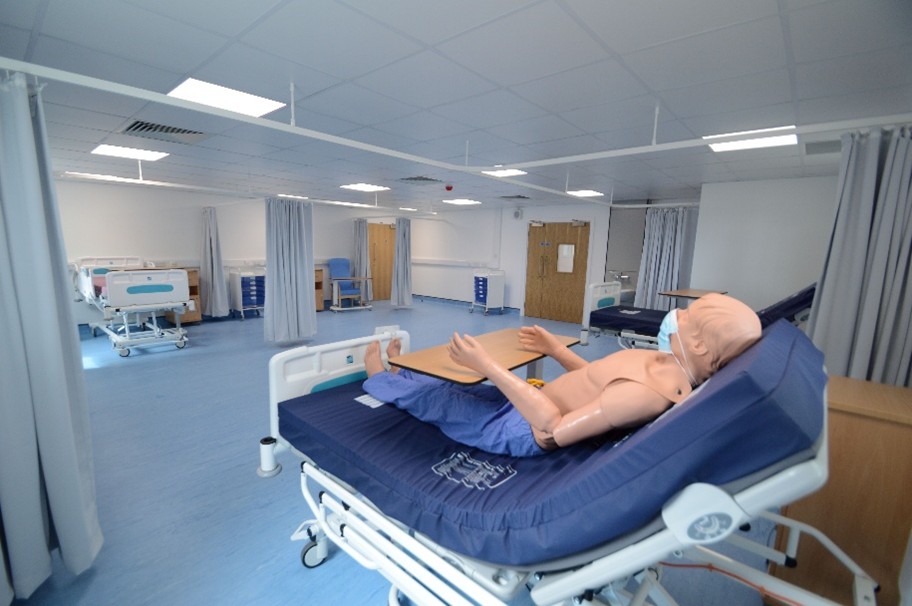 Figure 1: Image of the mock ward at UKHSA Porton Down (image courtesy of UKHSA)
The project used full-scale experiments with carbon dioxide and particle tracers to represent airborne pathogens, together with computational fluid dynamics (CFD) modelling, to understand the overall ventilation rates and airflow patterns in the ward. The data from these experiments and models were then used in infection risk models to evaluate how the ventilation provision may affect airborne transmission of pathogens.
The Leeds project team, Gulana Anwar, Ben Durnford and Billy Hollis were supported by academic expertise in ventilation, experimental techniques and mathematical modelling together with two CDT alumni, Amber Brennan and Alex Edwards. They worked closely with Ginny Moore and Simon Parks in the UKHSA Biosafety team at Porton Down who facilitated access to the mock-ward and supported the set up of experiments.
The project involved some key logistical challenges as experiments could only be conducted over a 2 day period. A scoping visit by the project team and lead supervisor Cath Noakes allowed initial measurements of the rooms and ventilation to be made to support CFD model development, and proof of concept particle data to enable the detailed experiments to be planned. A return visit by Gulana and Ben then enabled a substantial number of CO2 and particle experiments to be conducted, while in parallel the team were able to develop the CFD models and the zonal infection risk model for the whole ward.
The results demonstrated that the mock-ward ventilation rates were similar to the intended design and that both the multi-bed and single ward rooms had good air mixing. CFD models and particle experiments both showed the same trends and highlighted small variations in local ventilation effectiveness for different parts of the ward illustrating the influence of proximity to a source. Infection risk models showed that the high ventilation rates in the ward meant that airborne exposures were likely to be low.
 Figure 2: Results from CFD models showing recirculating air flows in the multi-bed ward.
The project outcomes provided important evidence for UKHSA to be able to use their facility with confidence. Ginny Moore said “working with the University of Leeds has provided us with new insights into how our mock-ward performs, and the results enable us to much better consider the role of ventilation as we design future studies that use the facility”.
The project also gave the CDT project team valuable insights into research and innovation in a government agency. Team member Gulana said “Working on this project has allowed me to appreciate the complexity of real-world hospital environments and the breadth of work that UKHSA undertake to provide public health understanding”. Team member Billy said “the project allowed us to develop valuable team working skills and how to share knowledge and data across different aspects of the project”.
The project also highlighted the potential for future work to develop better understanding of airborne risks. Team member Ben said “heat sources and transient effects such as healthcare worker movement can have important impacts on infection risks, and the models we have developed here could provide a valuable framework for investigating these effects in a future project”.
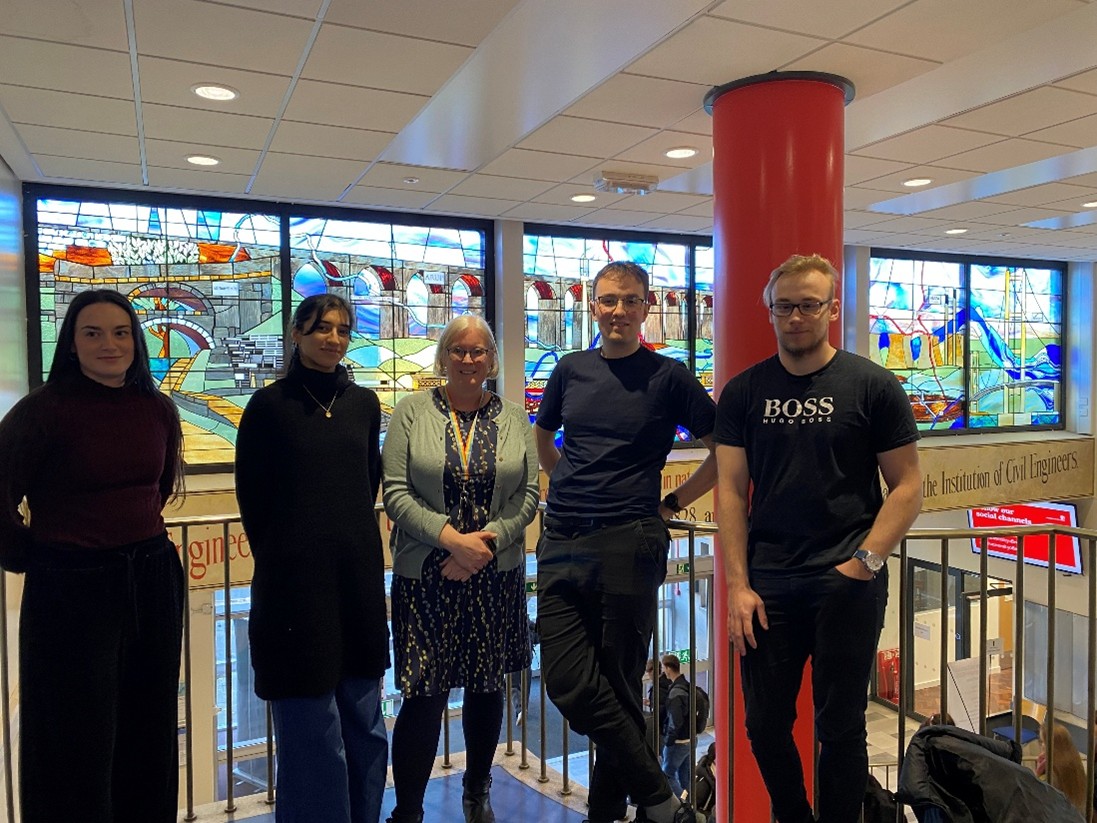 Figure 3: Members of the project team at Leeds (L-R), Amber Brennan, Gulana Anwar, Cath Noakes, Ben Durnford, Billy Hollis. Supervisors not pictured are Louise Fletcher, Martin Lopez-Garcia, Marco-Felipe King, Waseem Hiwar (Leeds), Alex Edwards (CDT alumni), Ginny Moore and Simon Parks (UKHSA)
Reference:
1. Julian F Guest et al. “Modelling the annual NHS costs and outcomes attributable to healthcare-associated infections in England”. In: BMJ Open 10.1 (2020). DOI: 10.1136/bmjopen-2019-033367