
Meet our new Co-Director - Marco-Felipe King
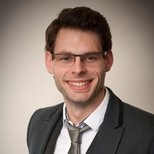 We are delighted to welcome Marco-Felipe King as Co-Director of the CDT. To help introduce Marco to the CDT community, we asked him a few questions about his background and motivations for the role.
What attracted you to the role of Co-Director?
What drew me in was the chance to help shape how a whole cohort of researchers learns to work across disciplines. My own research has always lived at the boundaries, between fluid dynamics, statistics and health, and the best work I've been part of came from people with different training solving a problem together. The CDT is built around exactly that idea, and being able to help steer it, rather than just contribute to it, was too good to pass up.
Can you tell us about your background and research interests?
I'm a mathematician by training who ended up working on how the built environment affects human health, particularly how infections spread indoors. Day to day that means computational fluid dynamics, Bayesian and statistical modelling, and a lot of work on human behaviour, because people turn out to be the messiest and most interesting variable in any building. I work closely with the NHS, industry and international partners, running both experiments and models to trace pathogens from source to person. The common thread is using fluid dynamics to answer real questions about health.
What does this role mean to you, and what are you most looking forward to?
It's a step into research leadership at a scale I care about, shaping an environment rather than a single project. What I'm most looking forward to is the cohort itself: watching a group of students from very different backgrounds become a team who lean on each other. I've seen how powerful that is, and helping build it is the part of the job I find genuinely exciting.
How do you define an inclusive and supportive research environment?
One where people feel they can contribute before they feel like experts, where a nervous first-year and a returning career-changer both believe they belong in the room. Practically, that means designing things so no single background dominates, being explicit about expectations so nobody has to guess the unwritten rules, and treating support as something people need in different amounts at different times, not a one-size-fits-all.
How do you plan to engage with students and staff across the CDT?
By being visibly around and genuinely reachable, as a personal tutor, in workshops and away days, and in the everyday moments where most real mentoring actually happens. I've built and run interdisciplinary networks for years, so I'm at my most useful connecting people: linking a student to the right supervisor, the right partner or the right method. I'd like students to see me as someone who opens doors across the centre, not just within my own corner of it.
What advice would you give to students from underrepresented backgrounds pursuing a PhD in fluid dynamics?
That the very thing you might feel sets you apart is often your biggest asset. Fluid dynamics needs people who come at problems differently, from maths, from engineering, from a non-traditional route in, and the field is better for that mix, not despite it. Find the people who back you, ask for what you need without apology, and don't mistake feeling like the odd one out for not belonging. You belong the moment you're contributing, and you'll be contributing sooner than you think.
What initiatives or activities would you like to introduce or expand?
I'd love to bring in more hands-on, cross-team challenges where students from different backgrounds have to solve the same problem together. I've run sessions like that using everything from World Cup prediction to real experimental data, and they build both skills and friendships fast. More broadly, I want to strengthen the bridges between the CDT and the wider networks I'm part of, such as the Healthy Buildings Network Leeds (https://healthybuildingsnetwork.org), so students get more chances to work with industry, clinicians and policy people while they train.
Outside of work, what do you enjoy in your spare time?
Most of my spare time goes on tennis and football with my son, which is where I do my best thinking, or at least my best switching-off. We only ever speak Spanish or German together, so family life doubles as keeping my languages alive. I teach 8-10 year olds on a Sunday afternoon and more often than not somehow they've managed to learn about some form of fluid dynamics problem or application.
What is one thing you'd like CDT students to know about you?
That my door is genuinely open, not as a formality, but because the parts of this job I enjoy most are the conversations. Whether it's a research problem, a career wobble, or just needing someone to think out loud with, I'd rather you came and asked than sat with it alone.