
Meet our new Co-Director and EDI Lead - Claire Mcllroy
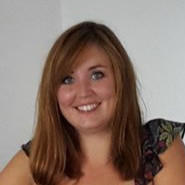
We are delighted to welcome Claire McIlroy as Co-Director of the CDT, a role she took up in April, succeeding Cath Noakes. In addition to her Co-Director responsibilities, Claire will lead on Equality, Diversity and Inclusion (EDI), bringing valuable experience and a strong commitment to fostering an inclusive and supportive CDT community.
What attracted you to the role of Co-Director and EDI Lead within the CDT?
My PhD (Leeds, 2014) was a highly interdisciplinary, industry-focused project, which gave me an appreciation of the value of collaborative research environments like the CDT. Alongside the EDI-focused work I’ve been involved in through LIFD, the British Society of Rheology, and at School level, I was keen to bring this experience to the role and help support the CDT community.
Can you tell us a bit about your background and research interests?
My research interests are focused on theory and modelling of non-Newtonian fluids. After completing my PhD, I moved to Georgetown University, Washington DC for a post-doc to better understand extrusion-based 3D printing. In 2017, I was awarded a Royal Commission for the Exhibition of 1851 independent research fellowship to study “Semi-crystalline polymers for 3D printing”, which I held at the University of Nottingham. From 2019-2024, I was a Lecturer in the School of Maths & Physics at the University of Lincoln, before returning to Leeds.
What does this role mean to you, and what are you most looking forward to?
I’m most looking forward to getting to know the current students and helping to recruit future cohorts. I hope I can support students through what can sometimes be a challenging and non-linear career path and help foster an environment where they feel supported and able to thrive.
How do you define an inclusive and supportive research environment?
An inclusive and supportive research environment should make people feel welcome, enable people to fully participate in research, and instil a sense of belonging to its community.
What are your key priorities for enhancing equality, diversity and inclusion within the CDT?
My key priority is to work with the leadership team and CDT students to understand what is already working well and identify where we can make the biggest impact. Ultimately, I want to help ensure that inclusion, support, and excellence are embedded throughout the entire CDT journey — from recruitment and onboarding to students’ day-to-day experiences to graduate outcomes.
How do you plan to engage with students and staff across the CDT?
I’m really pleased to be getting involved across the CDT — my calendar is already filling up with activities (especially the residential in July!). I’m keen to support training activities around career development (e.g., applying for fellowships), and I’m looking forward to getting to know my personal tutor group.
What advice would you give to students from underrepresented backgrounds pursuing a PhD in fluid dynamics?
Don’t underestimate the value of your perspective and experiences. Fluid dynamics, and research in general, benefits from having people with different backgrounds, ideas, and ways of thinking. PhDs can be quite daunting at times for everyone and building a supportive network of peers and mentors is key to the process.
What initiatives or activities would you like to introduce or expand?
I’m keen to foster a strong sense of belonging and community across the CDT. Cohort identity is especially important in year one, but I think that sense of connection should continue throughout the whole programme. I’d love to help strengthen links between cohorts, build closer connections with LIFD staff, and better involve alumni as role models and mentors for current students.
Outside of work, what do you enjoy doing in your spare time?
At home I enjoy gardening and growing my own vegetables. I also love weekends away camping and hiking with my dog.
What is one thing you would like CDT students to know about you?
One thing I’ve learned is that academia can be a bit of an emotional rollercoaster, so I hope students feel they can always reach out for a chat — whether about research, careers, or the general ups and downs of PhD life.