
Building Resilience for PhD Success: Insights from Alumni and Supervisors
The session was supportive and reflective, focusing on building resilience throughout the PhD journey by drawing on insights from alumni and supervisors. Attendees gained practical strategies for staying motivated, managing challenges, and accessing support, as well as opportunities for open discussion and shared learning.
We had the pleasure of welcoming our alumni, Dr Rachel Hendrikse and Dr Luke Driver, who shared their PhD journeys, along with Dr Oliver Harlen, who provided supervisor insights.
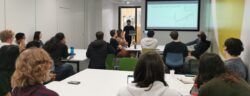
Luke emphasised that a PhD was a long, evolving journey that required resilience, effective time and self-management, and strong support networks. Drawing on insights from students, alumni, and supervisors, he highlighted common challenges such as imposter syndrome, burnout, and uncertainty, while offering practical strategies to maintain motivation, wellbeing, and productivity—such as setting realistic goals, maintaining work–life balance, and communicating effectively with supervisors. Overall, the key message was that progress was not always linear, but with support, adaptability, and a focus on wellbeing, students could successfully navigate their PhD and achieve positive outcomes.
 Rachel’s presentation highlighted how PhD projects can change significantly, emphasising that this is a normal part of research rather than failure. She shared key challenges such as imposter syndrome and burnout, alongside practical strategies for motivation, time management, and maintaining wellbeing. Her main message was that resilience, adaptability, and trusting the process are essential, and that even an unpredictable PhD journey can lead to successful outcomes.

Our final speaker, Oliver, presented practical insights into building a successful PhD experience through effective supervisor relationships and clear communication. He emphasised the importance of establishing a strong supervisory team, setting clear roles and expectations from the outset, and preparing effectively for meetings to demonstrate progress. The session also highlighted the need for adaptability, proactive communication, and making use of wider support networks when challenges arise, reinforcing that a PhD is an individual journey supported by collaboration, openness, and self-advocacy.

The session concluded with table discussions, providing students with the opportunity to engage in more detailed conversations with the speakers. This created space for attendees to ask further questions and explore topics such as steps they can take to support their wellbeing, how they can support others, and practical tips for managing up.